




“What is the function of my gallbladder?”
What is the Function of a Gallbladder? A Surgeon’s Plain-Language Guide
This is one of the most common question my patients will ask.
The gallbladder is a small, pear-shaped organ located in the upper right side of your abdomen, directly beneath your liver. Although it plays an important supporting role in your digestive system, many people are unsure of what it actually does or whether you can live a normal life without one.
Dr. Winston Woon (aka me) is a general surgeon specialising in laparoscopic gallbladder surgery in Singapore. Below will give you a summary regarding the function of the gallbladder, common conditions like gallstones, and what happens if it needs to be removed.
Where is the Gallbladder Located?
Your gallbladder sits neatly in the upper right quadrant of your abdomen, tucked under the liver. It connects to the liver and the first section of your small intestine (the duodenum) through a series of thin tubes known as bile ducts.
What Does the Gallbladder Do?
To understand the function of the gallbladder, you first need to understand bile. Bile is a dark green or yellowish fluid produced continuously by your liver to help your body break down and digest fats.
While the liver creates bile, the gallbladder serves three main functions:
1. Storing Bile
When you are fasting or between meals, your liver keeps producing bile. Instead of letting this fluid go to waste in the intestinal tract, your body directs it into the gallbladder for safe storage until your next meal.
2. Concentrating Bile
The gallbladder does not merely hold bile; it also concentrates it. By absorbing excess water and electrolytes, the gallbladder makes the stored bile up to 10 times more potent, ensuring it is ready to break down heavier, lipid-rich foods.
3. Controlled Release During Digestion
When you eat a meal—particularly one high in dietary fats—your digestive tract triggers the release of a hormone called cholecystokinin (CCK). CCK signals the gallbladder to contract, squeezing concentrated bile into the bile duct and delivering it directly into your small intestine to mix with food.
Why Is Bile Essential for Digestion?
Bile helps with processing dietary lipids. You can think of bile as nature’s dish soap for greasy pans:
Emulsifies Fats: It breaks large fat droplets down into microscopic particles so your pancreatic enzymes can dissolve and absorb them.
Absorbs Essential Vitamins: It enables the absorption of fat soluble vitamins, namely Vitamins A, D, E, and K.
Common Gallbladder Problems: Gallstones & Inflammation
The gallbladder continuously concentrates bile, chemical imbalances in the fluid—such as excess cholesterol or bilirubin—can cause the fluid to crystallise over time.
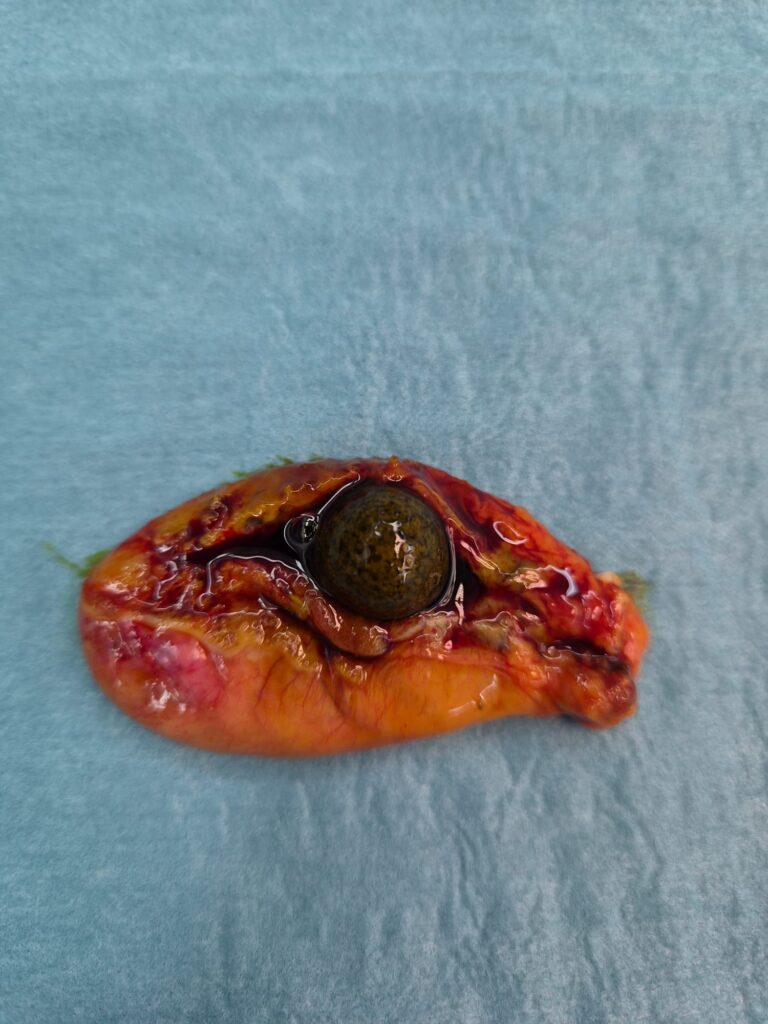
Gallstones (Cholelithiasis): Hardened deposits that form inside the gallbladder. They can range from the size of a grain of sand to a golf ball.
Gallbladder Attack (Biliary Colic): Occurs when a gallstone temporarily blocks the outlet of the gallbladder, causing sharp, severe pain in the upper or right abdomen. This often occurs after meals or fatty food. Some patients also get awoken from sleep with this pain.
Gallbladder Inflammation (Cholecystitis): A prolonged blockage that leads to infection, fever, nausea, and severe, continuous pain requiring prompt medical attention.
Can You Live Without a Gallbladder?
Yes, absolutely. While the gallbladder serves a useful purpose, it is not an essential organ for survival.
If you develop symptomatic gallstones or chronic inflammation, surgical removal of the gallbladder—known as a cholecystectomy—is often the definitive treatment.
When the gallbladder is removed, your liver continues to produce bile normally. Instead of being stored in a central tank, the bile simply trickles continuously directly from the liver into your small intestine. Most patients digest food normally after a brief recovery period and return to their regular diet without long term lifestyle changes.
Seeking Help for Gallbladder Pain in Singapore
If you regularly experience indigestion, bloating, or upper abdominal pain after eating oily meals, it may be a sign of gallstones or gallbladder dysfunction.
Consultation: Early diagnosis with a quick abdominal ultrasound can confirm whether gallstones are the root cause.
Treatment Options: Modern gallbladder removal is routinely performed using minimally invasive surgery. Laparoscopic cholecystectomy is the gold standard of care. This technique will have minimal scarring, reduced post-operative pain and a rapid recovery.
Have questions about gallbladder symptoms or keyhole surgery?
Please feel free to give us a call, text or through our website to schedule an appointment so we can have an open discussion regarding your condition.
Share this blog via: